
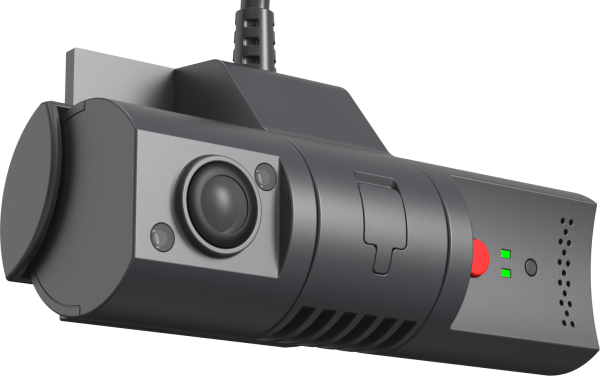
Dual Dash Cam Systems & How They Work

Dual Dash Cam Setup and Reporting
Dual dash cams provide valuable information for evaluating the circumstances leading to a crashes according to the National Transportation Safety Board (NTSB) who concluded that onboard video systems can help avoid such disasters. TrackNet’s GPS dual dash cam works with any of our verified FMCSA-compliant E-log providers, putting you in the driver’s seat with our live feed dash cam. Discover our range of fleet dash cams with AI and GPS designed to enhance driver safety and provide comprehensive monitoring.
What is a Dual Dash Cam?
- Dual Dash Cam
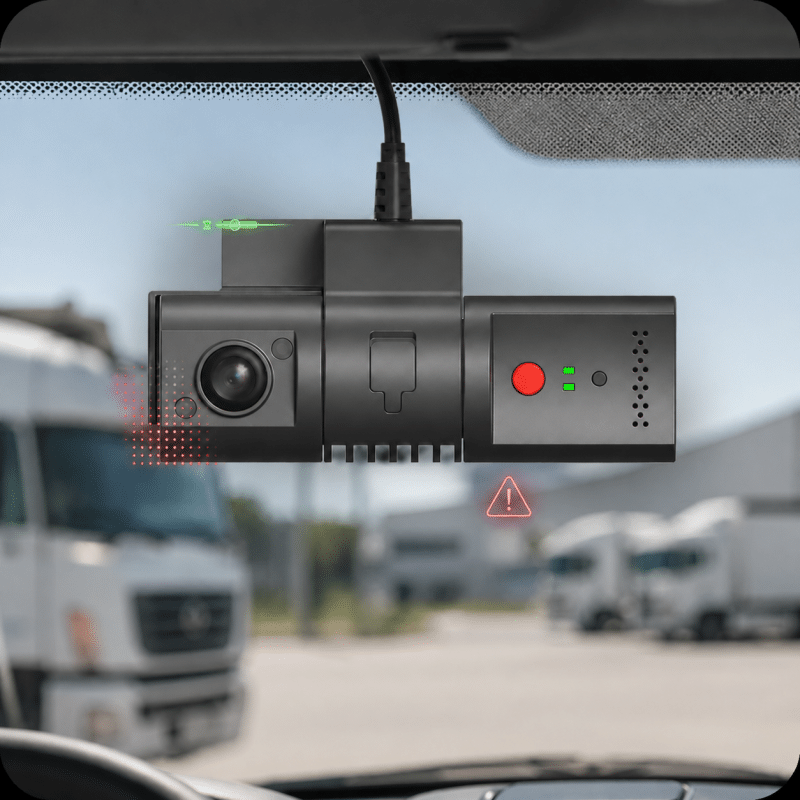
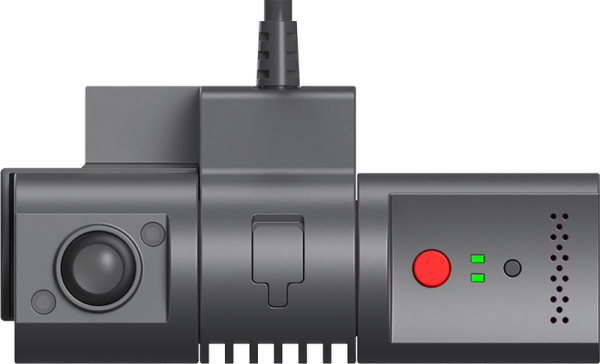
- A two-lens vehicle camera system that records the road-facing view and the driver-facing (in-cab) view simultaneously, with GPS, timestamps, and event-triggered context tied to each clip. Fleets use dual dash cams to document incidents, support insurance and litigation, and coach safer driving behavior.
First-mention definitions used on this page
- Store & Forward
- When cellular coverage is lost, footage is recorded locally and uploaded automatically once signal returns. No footage is lost.
- AI Event
- TrackNet AI flags a driver-behavior incident (lane departure, tailgating, distraction, phone use, fatigue, seatbelt misuse).
- G-Force Event
- Sensor-triggered physical incident (hard brake, hard acceleration, hard cornering, shock/impact).
How It Works
From install to evidence in three steps:
Store & Forward: If there’s no cell signal, footage stores locally and uploads when coverage returns.

No Long Term Contract

Self-Install Options

Store Forward Uploads

Six Month Media Retention
Self-install supported for basic systems. Multi-camera installs may require TrackNet-trained installation for hardware warranty coverage.
Media pushed to the platform is retained for 6 months.
Why Fleet Managers Choose TrackNet
TrackNet dual dash cams record the road and the cab simultaneously in 1080p HD — capturing the half of the event most single-lens systems miss. Every clip pairs both views with GPS location, timestamps, and AI-flagged behavior, so the same record shows what was happening on the road and what the driver was doing at that exact moment. Road-facing AI watches for tailgating, lane drift, and forward-collision risk. Driver-facing AI catches distraction, phone use, fatigue, and seatbelt misuse — before they become incidents, and on record when you need proof.
No Long-Term Contract

Live GPS + Geofencing

OBD-II Diagnostics

AI Distracted-Driving Detection

Cloud Upload & Encrypted Storage

Dual 1080p HD Recording
Choose the right TrackNet camera package
TrackNet dual dash cams are sold in three packages. The right fit depends on your fleet size, the behaviors you most want to monitor, and your installation approach. The summary below is a starting point — your fleet’s actual configuration is scoped during a short demo.
Basic
Single-lens or dual-lens entry package
Standard
Dual-lens with core AI monitoring
Advanced
Full AI + behavior coaching package
Not sure which tier fits your fleet? Schedule a 15-minute demo and we’ll scope it together.
Video Evidence That Supports Your Fleet When It Matters
TrackNet dual dash cam footage helps fleet teams resolve claims and litigation faster by showing what happened on the road and what the driver was doing in the cab — in the same event record. Every clip is tied to road-facing video, driver-facing video, GPS location, and timestamps. The result is a single, defensible record covering the moments before, during, and after an incident, without reassembling fragments from separate systems.
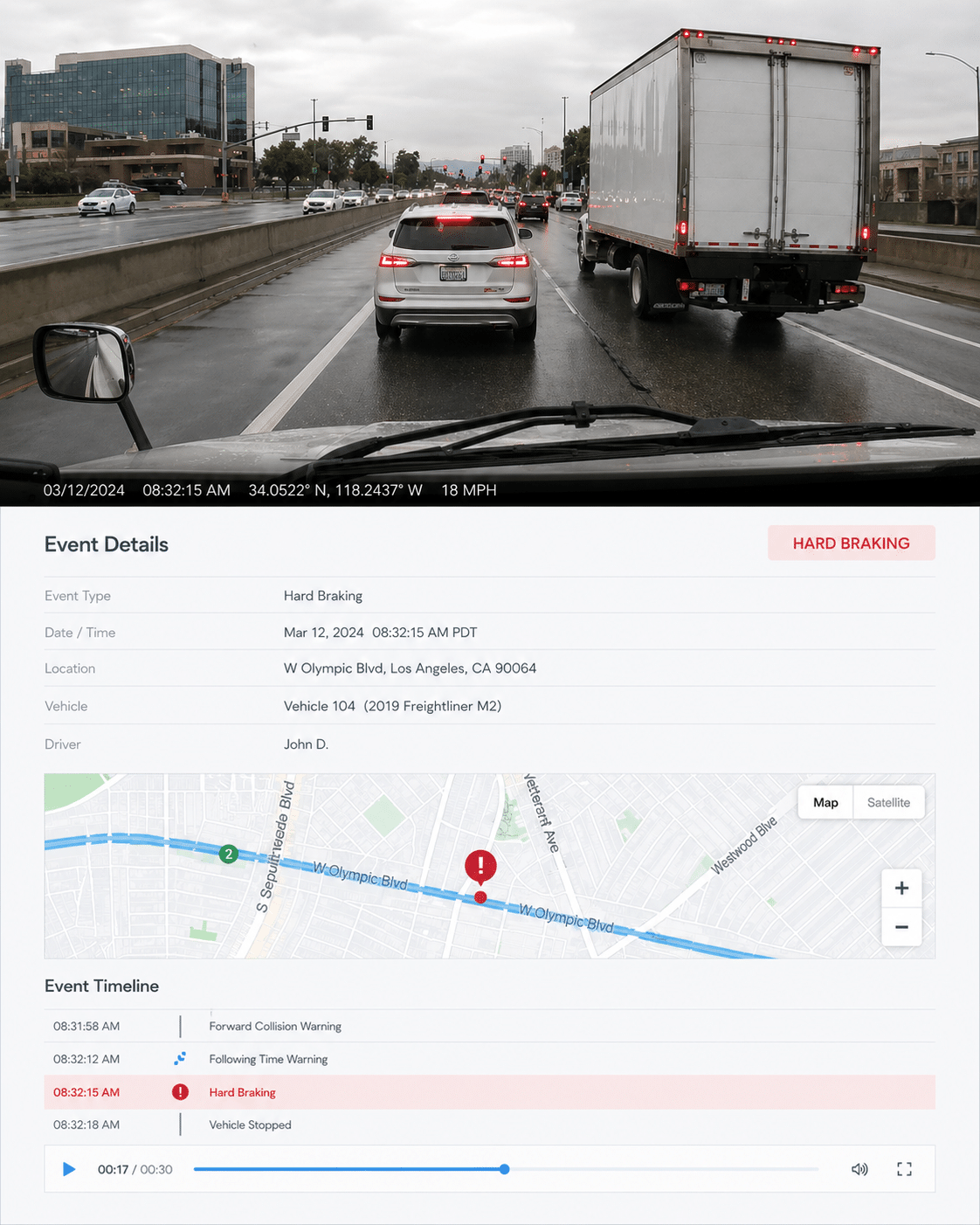
- An event is triggered – A collision, hard braking, an AI flag (phone use, lane drift, tailgating, fatigue), or a panic-button press creates a tagged event. Both the road-facing and driver-facing cameras capture the same moment automatically — no driver action required.
- The clip is stored with context – Road-facing video, driver-facing video, timestamp, GPS location, vehicle, driver, and trip details bundle into a single event record — built to be retrieved in seconds when you need it.
- Managers review the event – The TrackNet dashboard plays road-facing and in-cab footage side-by-side for any flagged event, and lets managers filter or search across the fleet by vehicle, driver, date, or alert type.
- Evidence is exported – The full event package — road-facing video, driver-facing video, GPS coordinates, and timestamps — can be downloaded or shared with insurers, legal teams, or internal stakeholders. A dual-lens record is harder to dispute than a single road-only clip.
- The platform supports coaching – Driver scorecards and event summaries are built on driver-facing footage showing actual in-cab behavior — distraction, fatigue, seatbelt use, phone use. Coaching becomes a conversation about something both the manager and driver can see, not interpret.
ADAS Alerts and AI Driver Monitoring
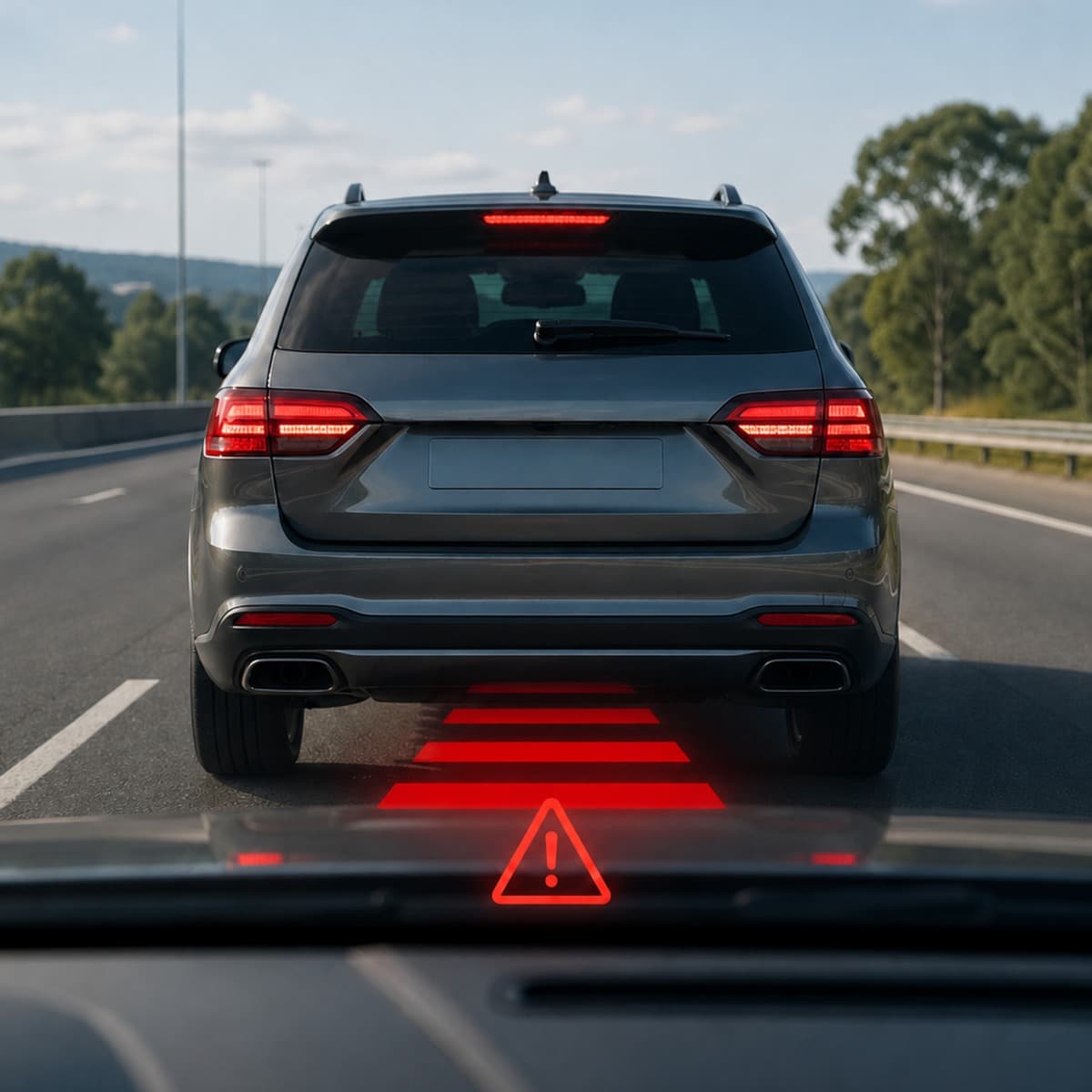
TrackNet AI runs on both lenses of every dual dash cam. Road-facing ADAS identifies driving-environment risks like tailgating, lane drift, and forward-collision threats. Driver-facing AI identifies in-cab behaviors like distraction, drowsiness, phone use, and seatbelt misuse. When either lens flags an event, the driver receives an immediate in-cab voice alert and the manager receives a tagged clip with both video feeds, GPS, and timestamp — ready for coaching, claim defense, or compliance documentation.
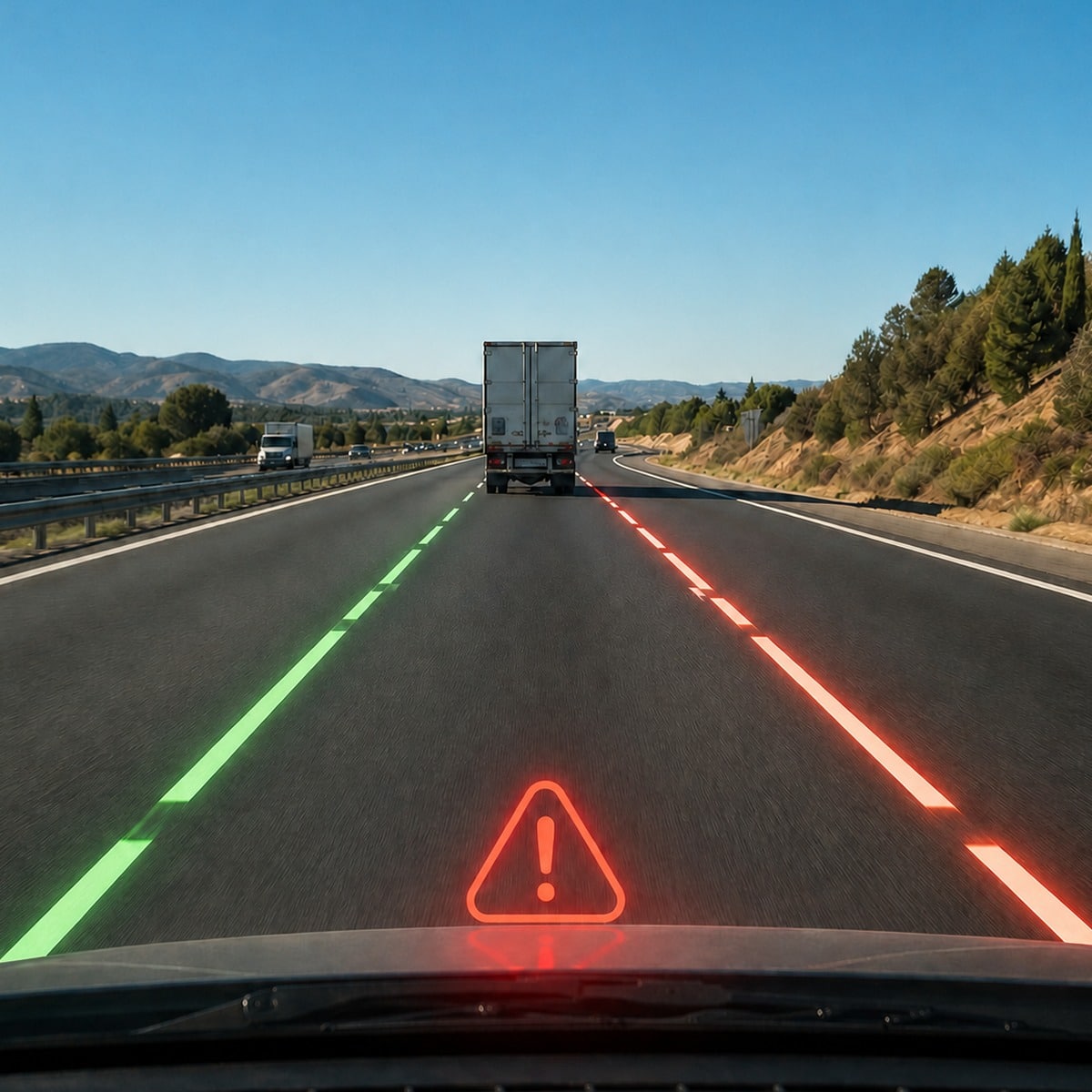
Road-Facing ADAS
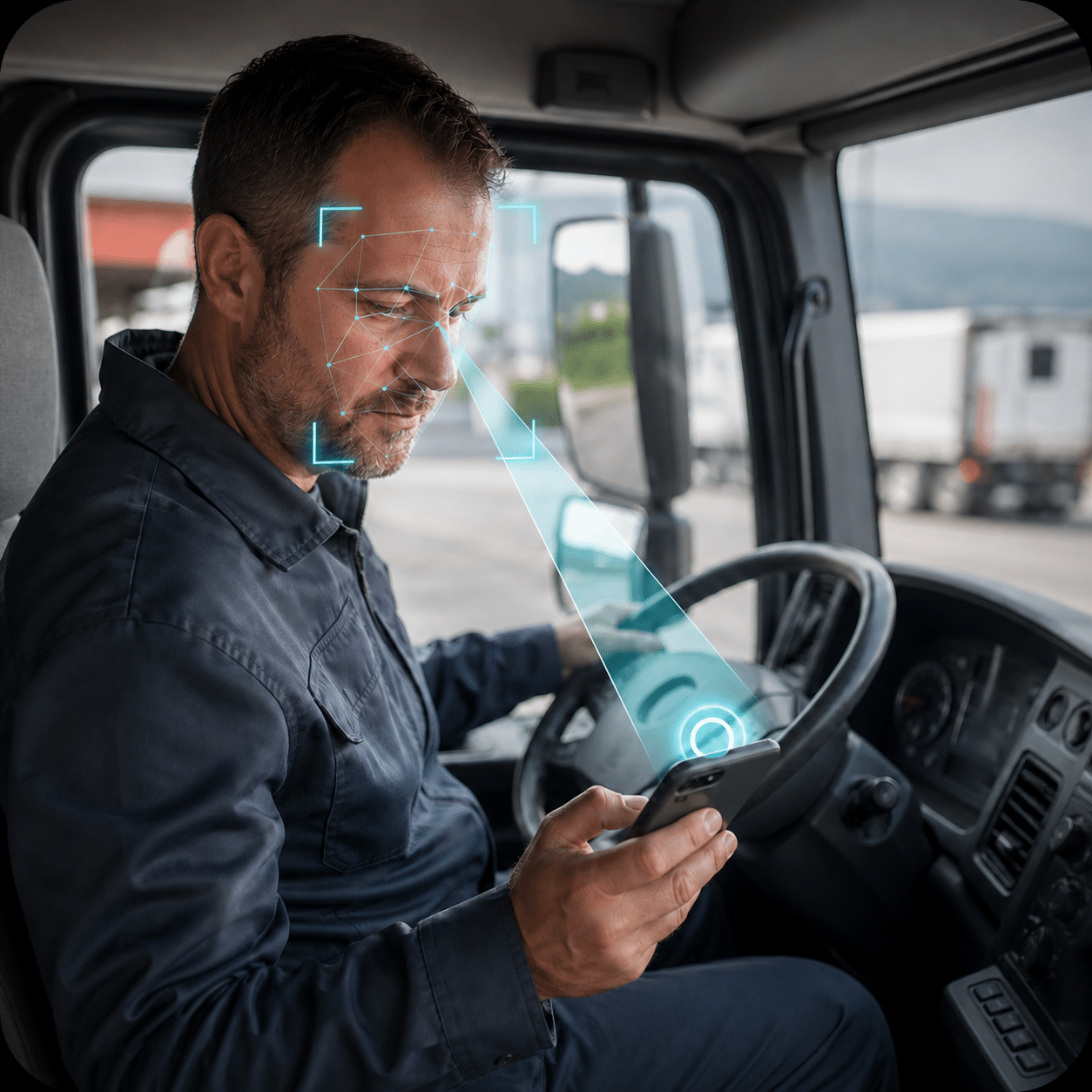
Driver Monitoring
Vehicle Dynamics
Camera Health
AI Events (driver-behavior monitoring)
G-Force Events (sensor-triggered)
What Dual Dash Cams Add
Why Fleets Choose Dual-Lens
ELD Compliance + Roadside Inspection Benefits
Paired with an ELD, dual dash cam footage neutralizes a common line of legal attack: it proves hours-of-service compliance with concrete evidence rather than disputed log entries. Roadside inspections move faster, disputes resolve quicker, and drivers spend less time stopped. Want to dig deeper into ELD compliance? See our overview at /fleet-dash-cams/.
A Note on Driver-Facing Cameras
Dual dash cams are typically used for safety coaching and incident documentation. Fleets should align driver-facing camera use with internal policy and training so drivers understand how footage is used.
Installation
Basic camera systems: self-install supported. Multi-camera projects: TrackNet-trained installation recommended due to complexity; hardware warranty coverage depends on trained installation for multi-camera deployments.
Equipment ships in 1–2 business days. Your TrackNet platform is active from day 1.
Storage, Security & Retention
All Driver Media Archived on the TrackNet Platform Includes:
Dual Dash Cam Specs at a Glance
| Spec | TrackNet Dual Dash Cam |
|---|---|
| Resolution | 1080p HD (driver-facing and road-facing) |
| Audio | Full audio recording |
| Storage | Encrypted SS drives or Micro SD (128 GB–2 TB optional) |
| Connectivity | 4G LTE with Store & Forward |
| GPS | Integrated GPS, timestamps, geofence boundary alerts |
| AI Detection | Cross-tier AI Events + G-Force Events |
| Cloud Retention | 6 months on the TrackNet platform |
| Event-to-Dashboard Time | Typically within minutes |
| Contract | No long-term contract |
| Installation | Self-install for basic systems; multi-camera = TrackNet-trained installation recommended |
WEB-BASED APPLICATION
Built on the TrackNet Cloud Platform
Live video alerts, geofence boundary triggers (text or email when a driver enters or leaves a designated area), historical vehicle trails, and event-tagged clips — all in one cloud platform you can access from any browser. Video stays available for 6 months from the moment it’s uploaded.
What Managers Actually See in the TrackNet Platform

Driver Footage

Distracted Driving

Live Stream

Vehicle Trails
Dual Dash Cam Footage Examples
Our cameras record video in 1080p with full audio recordings. Below are footage examples captured from actual commercial fleets.
Industries We Serve – Trucking and Heavy-Vehicle Fleets
TrackNet supports trucking and heavy-vehicle fleets across industries. If you operate specialized trucks, we will recommend the right camera configuration during the demo.


Frequently Asked Questions
A dual dash cam records two simultaneous video streams — one facing the road, one facing the driver — and tags each clip with GPS, time, and event context (collision, hard brake, AI-detected behavior). Footage stores locally to encrypted media, then uploads to the TrackNet cloud when connectivity is available.
TrackNet dash cams combine HD road-facing and driver-facing video with GPS, AI Events (lane departure, tailgating, distraction, fatigue, seatbelt misuse), G-Force Events (hard brake, shock), and Store & Forward cloud upload — all in a single platform with no long-term contract.
Yes. TrackNet dual dash cams are designed for commercial vehicles of all sizes — from light-duty vans and pickups to heavy trucks, buses, and off-road equipment. Installation approach varies by vehicle type; we confirm fit during a short demo call.
Core features include 1080p HD video on both lenses, full audio recording, GPS and geofence alerts, AI Event detection, G-Force Event capture, Store & Forward cloud upload, encrypted local storage on SS drives or Micro SD, and 6-month cloud retention.
Yes. Live streaming is available in real time whenever the vehicle has cellular connectivity. Managers can pull live feeds from any camera in the fleet through the TrackNet dashboard.
Pricing depends on fleet size and camera configuration. TrackNet provides tailored quotes after a short demo/fit call — there is no flat per-camera price because every fleet's mix is different.
Yes. GPS is integrated into every TrackNet dual dash cam. Every event clip is tagged with location, time, and heading, and managers can view geofence-based alerts and full vehicle trails inside the platform.
No. TrackNet dash cams are designed for continuous fleet operation and remain installed in the vehicle. The system records event-triggered clips automatically; no driver action is required after each shift.
For fleets that face insurance claims, litigation exposure, or driver coaching needs, dual-lens footage usually pays for itself in claim cost reduction and faster dispute resolution. The cost is scoped to your fleet — schedule a demo and we’ll walk through your specific case.
Yes. The TrackNet platform is browser-based with one dashboard for video, GPS, AI events, and reports. No training certification required — most fleet managers are up and running on their first day.
TrackNet overlays event clips with GPS coordinates, timestamp, vehicle ID, speed, heading, and the event type (AI Event or G-Force Event). All overlay data is exportable for insurance and legal documentation.
Footage records locally to encrypted SS drives or Micro SD (128 GB–2 TB optional). When the vehicle has cellular coverage, clips upload to the TrackNet cloud via Store & Forward. Media on the TrackNet platform is retained for 6 months.
Most commercial fleets benefit from dash cams for three reasons: insurance claim defense, driver coaching, and roadside-inspection efficiency. Whether you NEED one depends on your fleet size, industry, and claim history — we walk through that on the demo call.
A fleet dash cam is a vehicle-mounted camera system designed for commercial use, with features beyond consumer dash cams: GPS, AI behavior detection, cloud video upload, centralized fleet management, and integration with ELDs and telematics.
AI Events are behavior-based detections from TrackNet’s vision-and-ML engine (lane departure, tailgating, distraction, phone use, fatigue, seatbelt misuse). G-Force Events are sensor-triggered physical events (hard braking, hard acceleration, hard cornering, shocks/impacts). Both categories trigger automatic clip capture.
Basic covers entry-level fleets with GPS and G-Force Events. Standard adds dual-lens AI monitoring for lane departure, tailgating, and forward-collision risk. Advanced adds distraction, fatigue, and seatbelt detection plus coaching scorecards. Which tier fits your fleet is best decided in a short demo — schedule one and we’ll scope it together
Schedule a Demo + Request a Quote
See the TrackNet platform in a short demo call. After confirming fleet size and camera requirements, TrackNet will provide a tailored quote. No commitment required.
What to expect:
- A 30-minute call with a TrackNet fleet specialist
- Review of your fleet size and camera requirements
- A tailored quote with no commitment required
Questions? Call (866) 654-2226 or email info@tracknetonline.com
We don’t publish flat pricing due to fleet variables; we’ll confirm requirements and provide a tailored quote after the demo.