
The Ten Seconds That Decide the Next Two Years
Ask any commercial fleet lawyer what they wish had gone differently in a case they lost, and the answer is usually some version of the same thing. The moment after the crash. The first notice of loss. The first ten seconds of documentation that either sets up a defensible claim or leaves the fleet fighting the next two years without the evidence they needed.
Most fleets I talk to have not thought seriously about their FNOL process. They assume the driver will call dispatch, dispatch will call the broker, the broker will call the carrier, and somewhere in that chain the story gets straight. It rarely does. Memories fade in the first hour after a crash. Phones die. Witnesses drive away. Facts get filtered through three people before the insurance company hears them.
Why FNOL Speed and Accuracy Matter Now More Than Ever
The stakes on getting FNOL right have never been higher. The American Transportation Research Institute published a report at the end of 2025 showing nuclear verdicts against motor carriers are rising at an alarming rate. The median nuclear verdict against a motor carrier reached $36 million in 2022, 50 percent higher than in 2013. Tractor-trailer tort case filings are up an average of 3.7 percent per year. In more than 80 percent of verdicts over $1 million, non-medical damages ran up to 10 times the actual medical bills incurred.
That is the environment your next crash gets litigated in. And Verisk, the standard analytics provider to the US insurance industry, has documented that FNOL data gathering is often inefficient, leading to inaccurate or incomplete information that causes delays and longer cycle times. Your carrier and their defense counsel are often trying to protect you with data that arrived days late and full of holes.
What Fleet Telematics Data Actually Does at FNOL
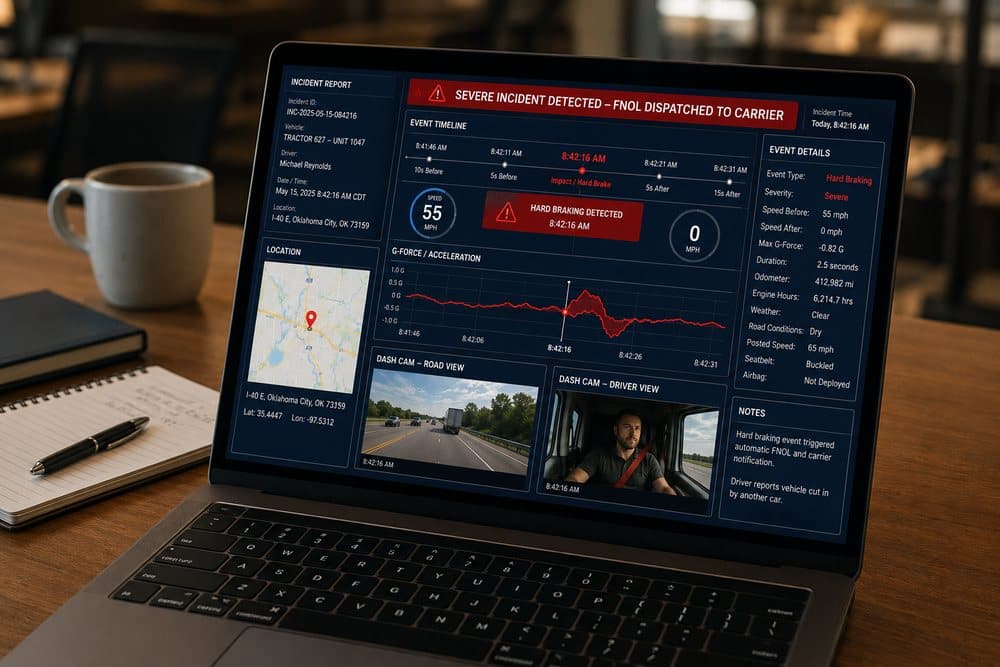
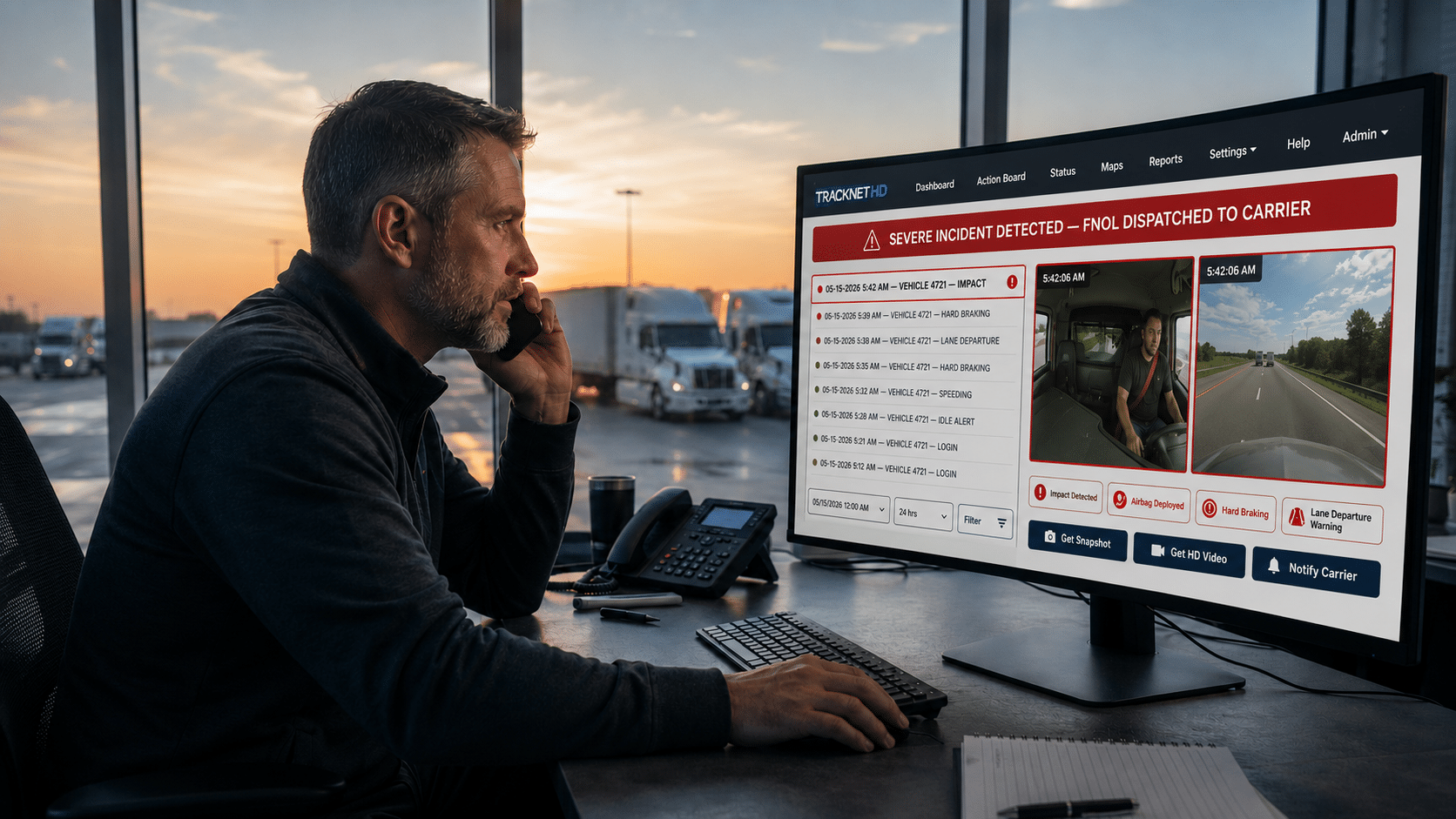
When a connected fleet system is in place, FNOL stops being a phone game. The moment a crash is detected, through hard-braking triggers, airbag deployment, or sudden GPS deceleration, the data flows automatically to the telematics provider and, from there, to the carriers and platforms tied to the fleet’s account. Time-stamped location. Speed at impact. Driver behavior for the ten seconds before the collision. Dual-facing camera footage of the road and the cab. Route history. All of it captured, not remembered.
That data can reach the insurance carrier’s workflow in minutes instead of the industry-average 13 days it typically takes for a manually filed FNOL. That thirteen-day gap is where narratives get built by the other side while your fleet has nothing on the record. Compressing it to minutes puts the truth on the ledger before any competing story has time to settle in.
Where This Fits Into Your Fleet’s Risk Strategy
FleetOwner recently covered this shift in a piece on how nuclear verdicts are driving up fleet insurance costs, and the throughline is the same as what I have been telling my customers for the last two years. The fleets that make it through this insurance environment are the ones with data at their back. The ones that do not are the ones whose only version of the story lives in their driver’s memory and their broker’s voicemail.
This is not a nice-to-have anymore. It is what your carrier is going to expect. Once a fleet is running our fleet dash cams and GPS tracking, the FNOL-critical data is captured automatically. Our fleet management solutions make sure that data is organized in a form the broker and carrier can actually use. How it works is what most fleets are surprised by — it is the absence of extra work on their side, not the addition of it, that makes the whole thing viable.
A Note from Bill
If you are running a fleet without a real FNOL data pipeline, that is the gap I would close first. Not next quarter. Now. Reach out and we will walk through what your current process looks like and where the exposure is.
— Bill Cahill, Founder & Owner, TrackNet
Related in This Series
This post is part of the TrackNet Insurance Telematics Series, written for fleet operators navigating new commercial auto underwriting requirements.
• Insurance Carriers Are Starting to Require Telematics Data. Here’s What That Means for Your Fleet.
• How SpeedGauge’s FAIR Score Affects Your Commercial Fleet Insurance Renewal
• Why Manual IFTA Reporting Is Costing Your Fleet More Than You Think


Leave A Comment