
Service Fleets Are Not Trucking Fleets
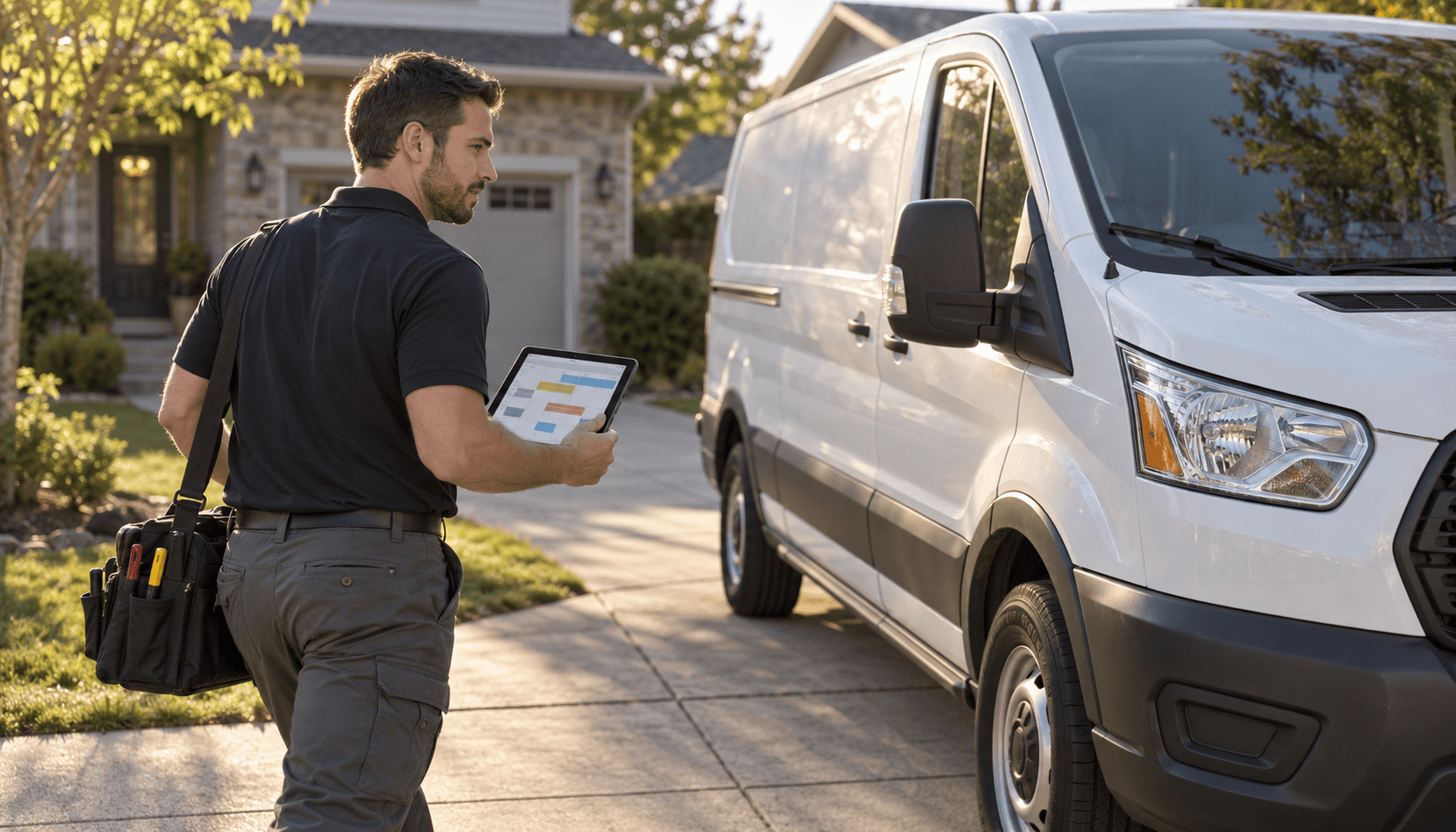
Every conversation I have about “fleet management” eventually runs into the same misconception. When most people hear the word fleet, they picture long-haul trucking. Interstates, hours-of-service logs, ELDs, freight tonnage. But most of the fleets I work with are not moving freight. They are running HVAC service calls, plumbing jobs, electrical work, cable installs, local delivery routes. Different vehicles, different insurance dynamics, different daily rhythm. Same word, different world.
That distinction matters because most fleet management tools were built for the long-haul world. They optimize for miles, hours, and DOT compliance. Service fleets need something else, and until you have watched a small HVAC shop try to reverse-engineer a trucking tool to answer “did my crew actually show up when the customer said they didn’t,” it is hard to see just how large the gap is.
Why the Two Are Structurally Different
Field Service News’ research on how service organizations manage fleets found that most companies treat fleet management and field service as separate business units — 48 percent of the companies surveyed. Another 31 percent embed fleet management inside their field service operations. Only a small share have field service leaders directly responsible for the fleet. In practice, that means the person answering the customer complaint about a late tech is usually not the person watching the vehicle telemetry. Communication happens weekly, or monthly, and rarely in real time.
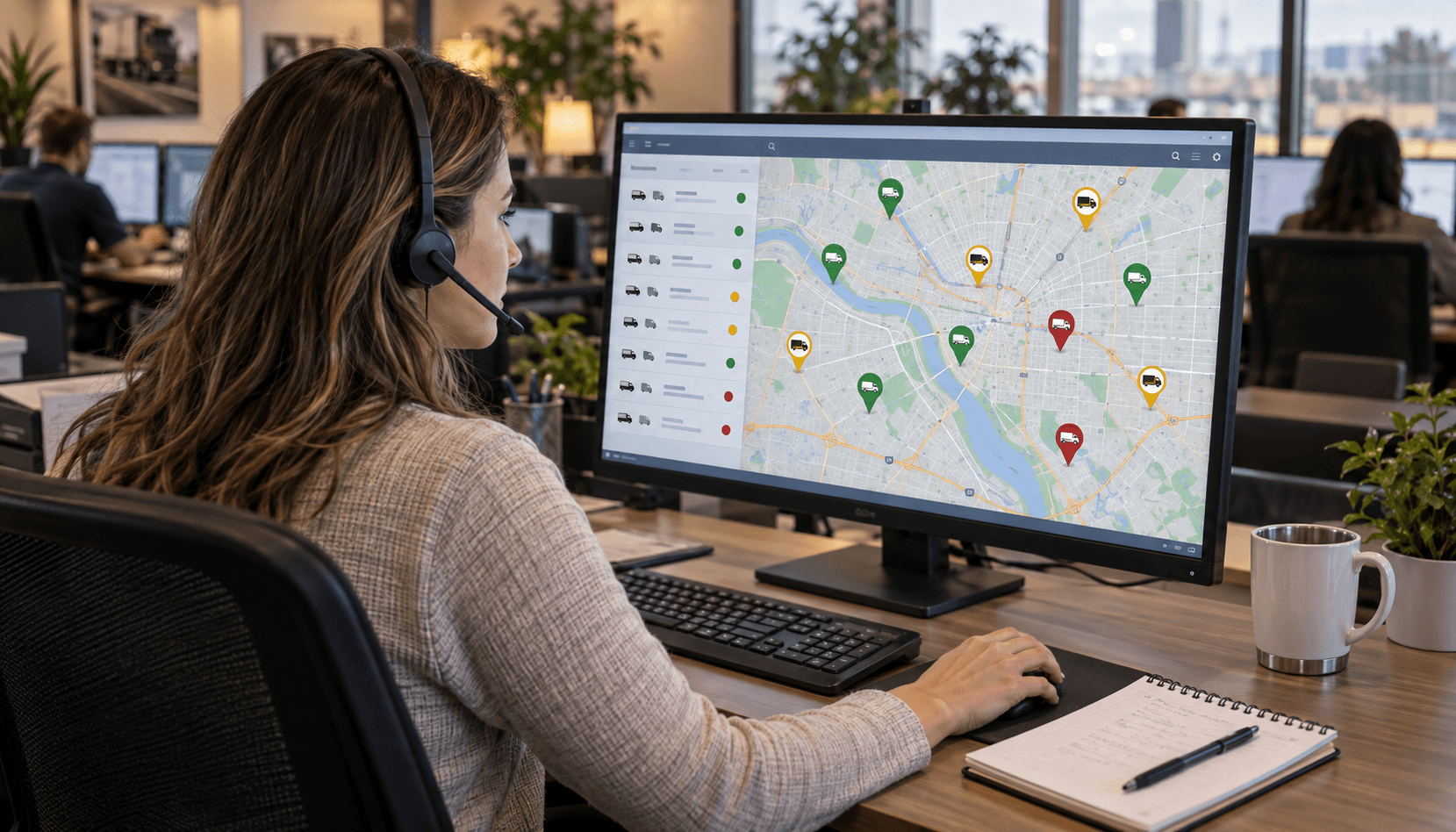
That structural gap is why service fleets have a different set of problems than long-haul. A trucking dispatcher watches for hours-of-service violations. A service dispatcher watches for a technician who has been idle at a Wendy’s for forty minutes when there is a customer waiting three miles away.
What the Data Actually Says Right Now
The best snapshot we have of where fleets are landing in 2026 comes from the Verizon Connect trends report, which surveyed nearly 900 fleet professionals. As Work Truck Online summarized the findings, GPS tracking is now at 80 percent adoption, up 11 points year over year. Video AI adoption reached 46 percent, up 10 points from 2023. And fleets using the technology are reporting real numbers — 11 to 19 percent decreases in fuel, accident, labor, and maintenance costs.
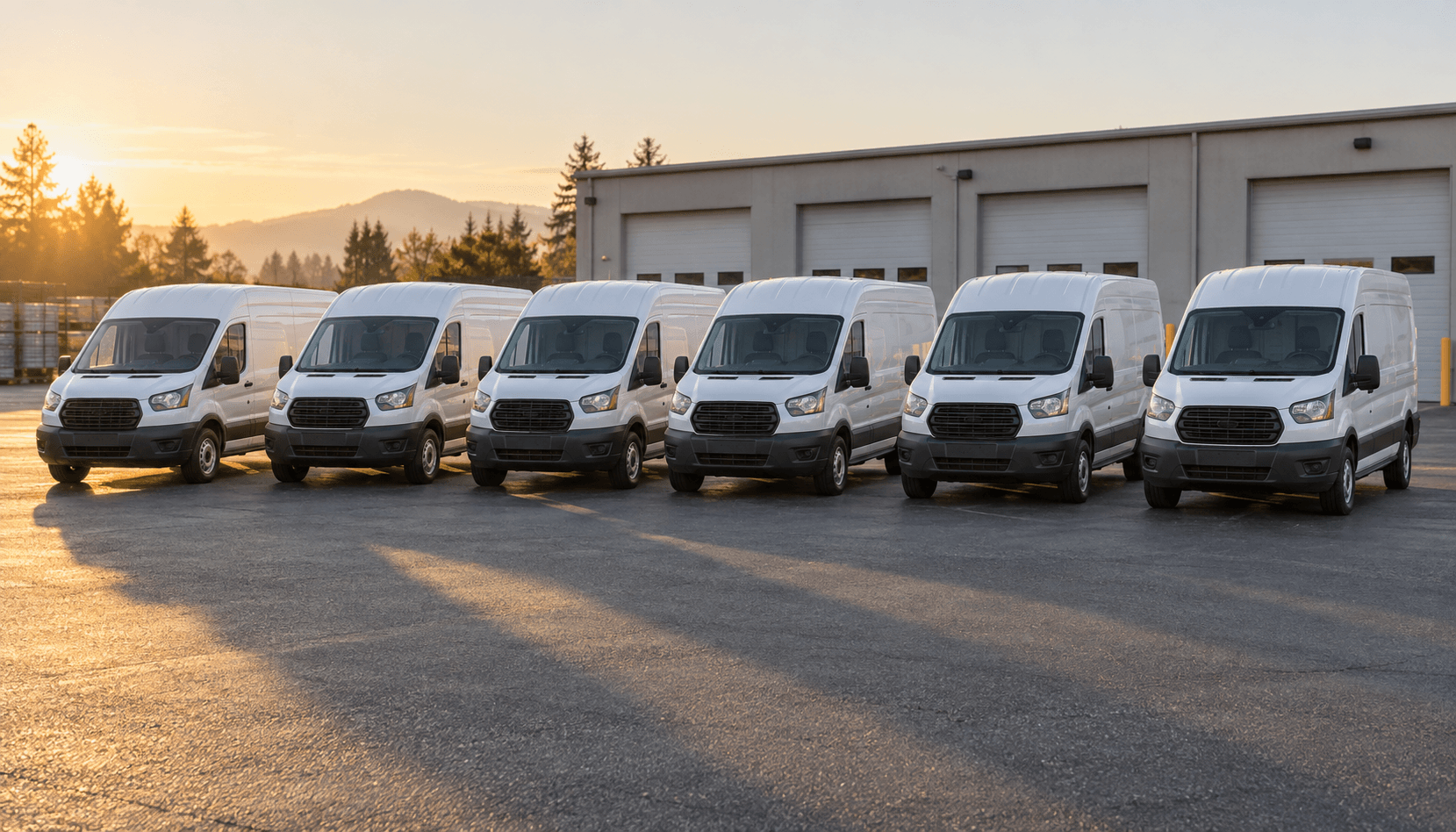
Fifty-five percent of field service management users say the tools improved operational efficiency. That is not “we like it.” That is “we measured it.” For a service fleet owner running fifteen vans and trying to figure out where the next dollar comes from, that is a large number worth taking seriously.
The Insurance Angle Service Fleets Underestimate
Insurance shows up differently for service fleets than for long-haul carriers. You are not usually looking at nuclear verdicts. You are looking at customer-property claims, sideswipe disputes in tight residential driveways, and the occasional “your driver ran over my mailbox” phone call. But the data pipeline that solves those problems is the same one the insurance industry is starting to require.
A recent Linxup survey of 267 field-service professionals — HVAC, electrical, landscaping, plumbing, and other trades — found that 77 percent believe fleet safety technology benefits outweigh privacy concerns. Nearly half, 44 percent, said they or a coworker had been in an accident where dash cam footage or GPS tracking made the difference in an insurance claim. Even more telling: 82 percent said they would drive better if pay were tied to safety scores.
That is not a technology-averse audience. That is a workforce that increasingly expects the tools.
Where TrackNet Fits In
The service fleet version of TrackNet is not the trucking version with different branding. Our fleet dash cams and GPS integration are configured for the operational reality of service work — customer arrival timestamps, in-cab video that documents job-site interactions, route history that answers customer disputes without a phone tree. Our broader fleet management solutions tie all of that back to the office so a dispatcher and a service coordinator are looking at the same information at the same time. That is the difference between a trucking tool bent into service work, and a system built for it.
A Note from Bill
If you run a service fleet and you have been managing it like a scaled-down trucking operation, that is probably costing you money you cannot see. Reach out and we will walk through what a service-fleet-first version of your ops looks like.
— Bill Cahill, Founder & Owner, TrackNet
Start of the TrackNet Service Fleet Series
This is the first post in the TrackNet Service Fleet Series, written for owners of HVAC, plumbing, electrical, and other service-vehicle fleets. Follow-up pieces will go deeper into specific parts of the operation.
Also worth reading from our earlier work • Insurance Carriers Are Starting to Require Telematics Data. Here’s What That Means for Your Fleet.


Leave A Comment