

The Compliance Nobody Talks About
Fleet owners talk about insurance premiums, driver shortages, freight rates, and diesel prices. Nobody talks about IFTA. Which is odd, because IFTA quietly consumes more time and creates more audit risk than most of the things fleet owners do talk about. In 25 years of watching commercial fleets grow, I have never seen a fleet fail because of IFTA. I have seen plenty of them bleed money and staff hours because they never fixed how they do it.
What IFTA Actually Requires
The International Fuel Tax Agreement covers 48 US states and 10 Canadian provinces. If your fleet has trucks over 26,000 pounds crossing jurisdiction lines, you are required to file quarterly fuel tax reports through your home state, which then distributes the tax to the other jurisdictions where you actually consumed fuel. Records for every fuel purchase, every mile driven in every state, must be kept for a minimum of four years, ready for audit. IFTA, Inc. publishes updated procedures manuals and articles of agreement multiple times a year. The rules are not getting simpler.
The Real Cost of Doing This by Hand
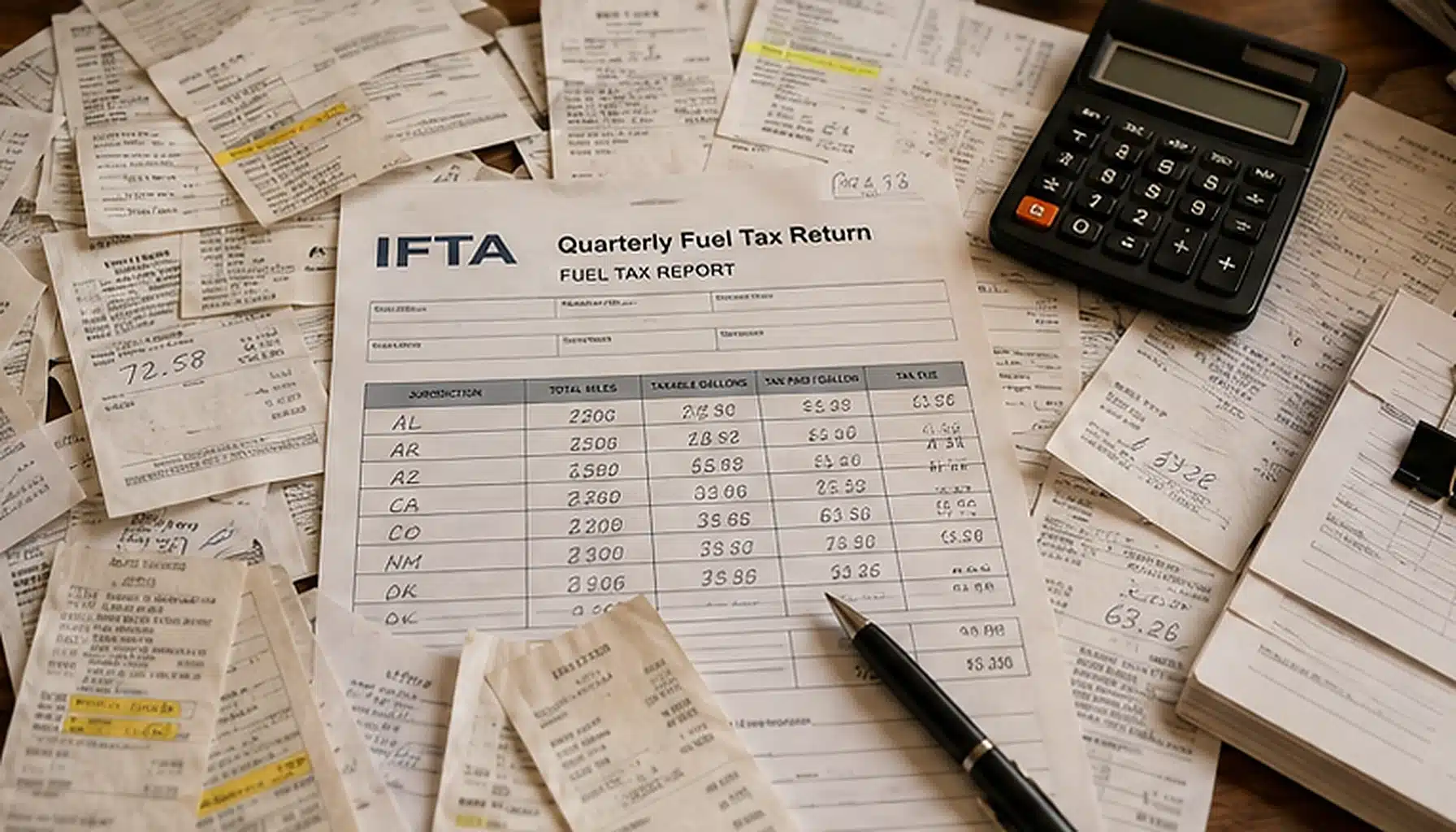
Most small and mid-sized fleets I talk to still do IFTA manually. A dispatcher or office manager spends a chunk of every quarter reconciling fuel receipts, cross-checking mileage against odometer readings, and building the quarterly return by hand. It works, until it does not. As FleetOwner notes in their fleet operator’s guide to IFTA, late or inaccurate reporting leads to penalties, interest, and potential license revocation. And audits, when they come, dig into four years of records. Fleets that have been sloppy for four years find out how sloppy in the space of a week.
Bigger fleets automated this years ago. Smaller fleets keep doing it by hand because the software conversation gets deferred every quarter, until an audit letter arrives.
What Automation Actually Changes
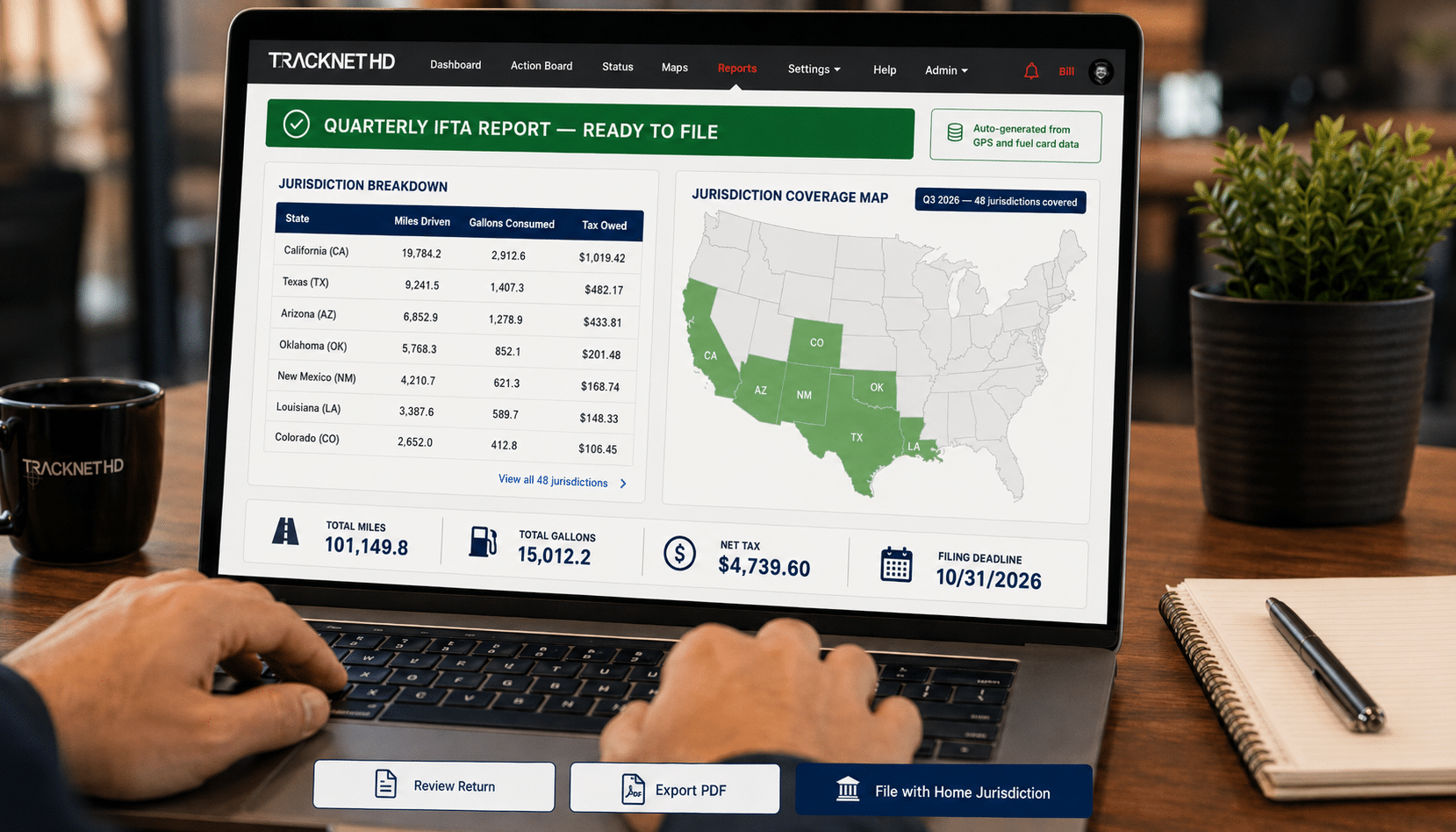
When fleet data flows into an integrated tax platform, IFTA stops being a quarterly scramble. GPS captures the miles by jurisdiction automatically. Fuel card integrations pull the purchase data. The quarterly return builds itself. Your office manager reviews, does not build.
That is the model ProMiles has been running for more than 40 years, and it is what our integration with them delivers. The same platform also handles truck-legal routing and oversize/overweight permitting, which is a separate compliance world that Commercial Carrier Journal recently covered in a piece on FMCSA’s five-year HOS exemption renewal for oversize and overweight haulers. If your fleet runs heavy loads, the routing side matters as much as the tax side.
Where TrackNet Fits In
Our role is data delivery. Once a fleet is running our fleet dash cams and GPS tracking, the mileage and route data your IFTA reports depend on is captured automatically. Our fleet management solutions organize that data in a form ProMiles can pull directly, which turns the quarterly grind into a review-and-approve. That is commercial fleet tracking doing something more useful than just knowing where your trucks are.
A Note from Bill
If you are still doing IFTA by hand, that is time your best people are not spending on the work that actually moves your business forward. Reach out and we will walk through what the automated version of this looks like for a fleet your size.
— Bill Cahill, Founder & Owner, TrackNet
Related in This Series
This post is part of the TrackNet Insurance Telematics Series, written for fleet operators navigating new commercial auto underwriting requirements and compliance demands.
• Insurance Carriers Are Starting to Require Telematics Data. Here’s What That Means for Your Fleet.
• How SpeedGauge’s FAIR Score Affects Your Commercial Fleet Insurance Renewal
• How Fleet Telematics Data Changes First Notice of Loss (FNOL) for Commercial Auto Claims


Leave A Comment