
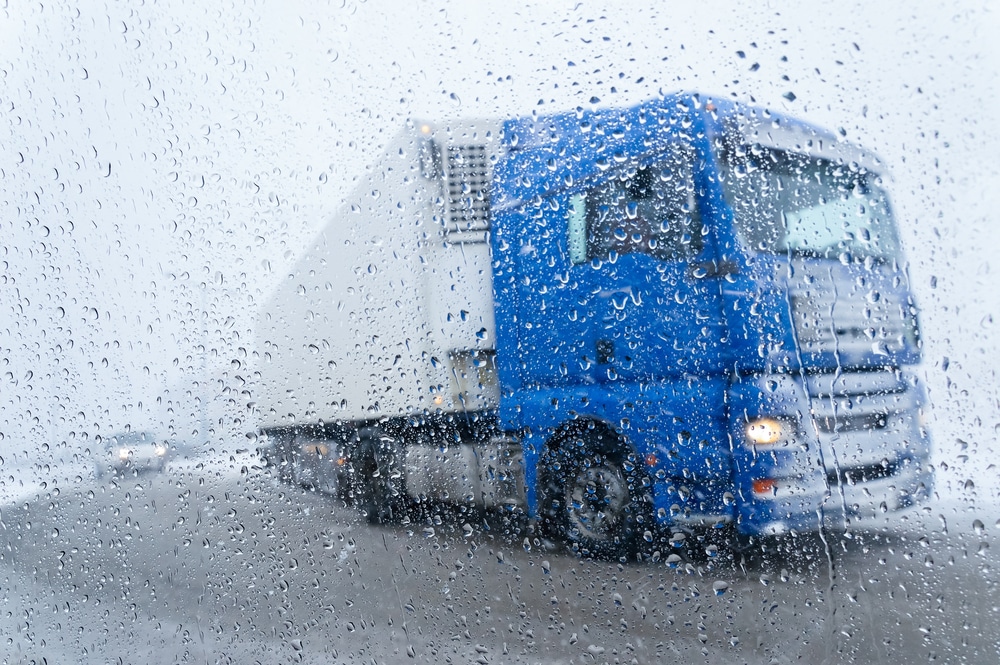
Last winter a driver called in from a county road that “looked fine.” Two minutes later he was white-knuckling it at 25 mph, watching the rear of the trailer hunt for traction. No warning. No drama until there was.
That’s the part people outside fleet ops miss: extreme conditions don’t announce themselves politely. They show up as a normal day that suddenly isn’t. We can’t run dispatch like a weather desk. We also can’t keep pretending weather is “just a delay.” Weather is a risk event, and it deserves the same discipline we give to HOS, maintenance, and incident response.
What “Weather-Triggered Alerts” Means in Fleet Terms
Weather-triggered alerts aren’t fancy meteorology. They’re a decision layer. A storm forecast is noise until it’s tied to what you actually do: slow exposure, reroute, stage departures, pause work, or park it. That translation is where telematics earns its keep.
When weather signals are fused with where your assets actually are, you stop guessing and start acting before the first near-miss becomes an accident. That operational connection is why weather tech in fleets matters: it’s not about “knowing the forecast,” it’s about reducing downtime and hard decisions made too late.
Road-Weather Reality Is Local, Not Regional
I’ve watched the same system roll across two terminals and behave like two different storms. Pavement temperature, visibility, wind exposure, and whether the road was treated changes everything. A forecast that looks manageable at 10 a.m. can turn ugly by 2 p.m. on a shaded stretch that never warmed up.
This is where road-weather programs get it right: decision support isn’t about being perfect, it’s about being consistent and context-aware. The real value is recognizing that “rain” can mean standing water, black ice, or just wet pavement depending on micro-conditions, and your alert thresholds should reflect that.
That’s the logic behind road weather management—it’s built around the idea that better operational decisions come from understanding how weather interacts with the roadway, not just the sky.
Compliance and Defensibility When the Day Goes Sideways
When conditions deteriorate, the fleet needs a common language. Drivers need to know when they’re empowered to slow down, reroute, or park without feeling like they’re “breaking the plan.” Safety leaders need documentation that explains why the plan changed. Operations needs consistency, because inconsistency is where arguments start.
Telematics-backed alerts create an auditable trail of “here’s what we saw, here’s what we did, here’s when we did it.” That matters when you’re aligning decisions with policy and staying inside the guardrails of hours-of-service decisions under deteriorating conditions.
If you’re thinking about the adverse driving conditions concept, start with FMCSA hours-of-service and treat it as a framework to inform internal policy, not as legal advice.
What an Alert Should Trigger
An alert should trigger action, not anxiety. Sometimes that’s speed discipline that’s brutally simple: slow down before traction forces it. Sometimes it’s route adjustments that avoid wind-prone spans, steep grades, or known flood pockets. Sometimes it’s staged departures, because the most dangerous miles are the first miles when everyone is rushing to “beat it.”
It should also normalize safe parking decisions. If visibility collapses or crosswinds start pushing a high-profile load, the right call is to pause work and live to run tomorrow. The alert should define when escalation happens, who gets looped in, and how a driver’s judgment is supported instead of second-guessed.
Trust-First Implementation
Drivers won’t buy in if alerts feel like surveillance. They’ll tune it out, and then it’s just another dashboard nobody trusts. Keep the signals tight. Fewer alerts, higher confidence. Make sure dispatch understands that an alert is a safety support tool, not a permission slip to pressure a driver into “just finishing the run.”
Alert fatigue is real. If everything is urgent, nothing is. Start with the weather that actually hurts you: black ice corridors, high-wind routes, heat days where fatigue creeps in and small mistakes get expensive.
Start Small, Act Decisively
Start small: map your highest-risk weather scenarios, define the few operational decisions that matter most, then wire alerts to those decisions. The win isn’t predicting every storm. The win is making fewer bad calls under pressure.
Key Takeaways
➣ Weather-triggered alerts only matter when they translate conditions into clear operational decisions.
➣ Local road conditions can turn a “routine forecast” into a high-risk segment fast.
➣ Consistent alert-driven documentation helps fleets justify safety-first changes when plans break.
➣ Trust comes from fewer, higher-quality alerts that support driver judgment instead of overriding it.


Leave A Comment